
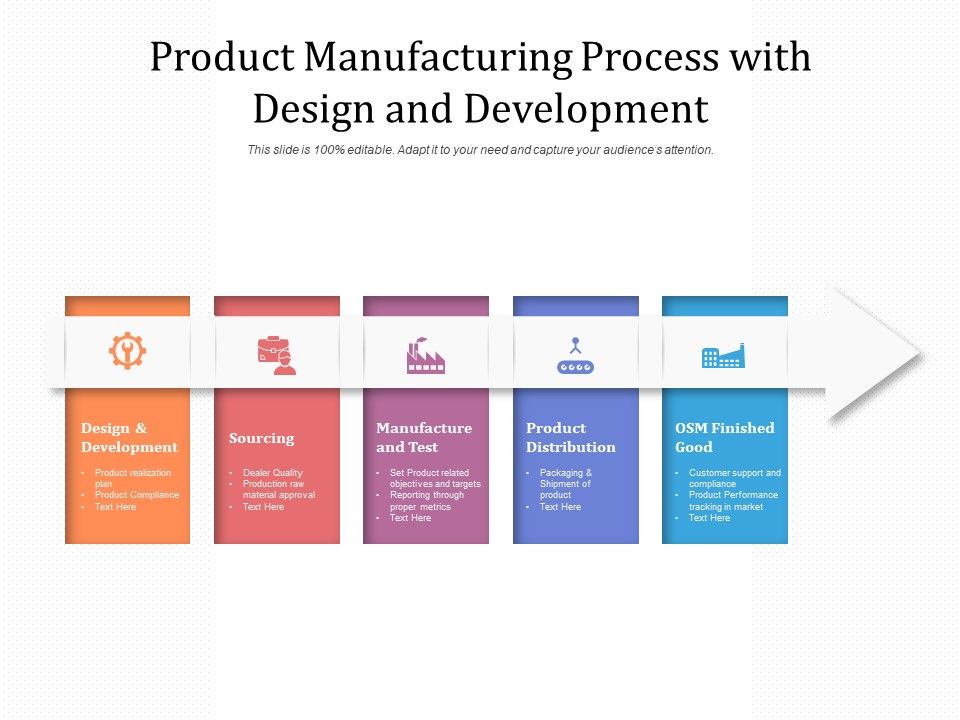
Modern manufacturing operations demand meticulous planning and foresight. Effective manufacturing production design is the blueprint for operational success, directly impacting product quality, cost-efficiency, and market responsiveness. It moves beyond simply creating a product; it involves strategically planning the entire journey from raw material to finished goods, ensuring every step is optimized for peak performance and adaptability. This integrated approach is crucial for companies aiming to maintain a competitive edge in today’s fast-paced industrial landscape.
Overview:
- Manufacturing production design is a strategic blueprint for the entire product lifecycle, optimizing efficiency and quality.
- Integrating Design for Manufacturability (DFM) early on reduces costs, complexity, and improves product quality.
- Leveraging automation, robotics, AI, and IoT enhances precision, speed, and consistency in production.
- Applying lean principles minimizes waste, improves flow, and fosters continuous improvement within operations.
- Sustainability is a core component, focusing on eco-friendly materials, energy efficiency, and waste reduction.
- Adaptability in design and process allows companies to respond quickly to market changes and supply chain disruptions.
- Effective manufacturing production design is critical for cost reduction, faster time-to-market, and maintaining high product standards.
Integrating Design for Manufacturability in Manufacturing Production Design
One of the foundational elements of effective manufacturing production design is the early integration of Design for Manufacturability (DFM) and Design for Assembly (DFA) principles. This approach means that as a product is being conceptualized, its ease of manufacturing and assembly is considered from the very beginning. By collaborating closely with manufacturing engineers, product designers can proactively identify and eliminate potential production bottlenecks, simplify component geometry, and reduce the total number of parts. For instance, selecting readily available, standardized components over custom-made ones can drastically cut lead times and material costs. Similarly, designing parts that can only be assembled in one correct orientation prevents errors on the production line. This foresight not only streamlines the production process but also significantly impacts the overall cost of goods and the quality of the final product, preventing costly redesigns later in the development cycle. In a competitive market, products designed with manufacturing efficiency in mind often reach customers faster and with fewer defects, leading to higher customer satisfaction.
Leveraging Automation and Technology in Manufacturing Production Design
The digital age has brought unprecedented opportunities for optimizing manufacturing production design through automation and advanced technologies. Incorporating robotics, Artificial Intelligence (AI), and the Internet of Things (IoT) can revolutionize production lines. Robotic systems offer unparalleled precision, speed, and repeatability for tasks ranging from assembly and welding to material handling, minimizing human error and reducing labor costs. AI-driven analytics can predict equipment failures, optimize production schedules, and identify areas for efficiency gains by processing vast amounts of operational data. IoT sensors embedded in machinery and products provide real-time insights into performance, allowing for immediate adjustments and proactive maintenance. The implementation of digital twins, virtual replicas of physical systems, further assists in simulating and testing production changes without disrupting live operations. Companies in the US, for example, are increasingly investing in these smart factory technologies to boost productivity and maintain global competitiveness, demonstrating how technology integration is no longer an option but a necessity for modern manufacturing production design.
Applying Lean Principles to Manufacturing Production Design
Lean manufacturing principles are indispensable for effective manufacturing production design, focusing on maximizing value for the customer while minimizing waste. This methodology encourages a systematic approach to identifying and eliminating all forms of waste (Muda), such as overproduction, waiting, unnecessary transportation, over-processing, excess inventory, unnecessary motion, and defects. Implementing lean thinking in the design phase means simplifying processes, reducing changeover times, and establishing a continuous flow of production. Techniques like value stream mapping help visualize the entire production process, pinpointing non-value-adding activities that can be removed. Just-in-Time (JIT) inventory management, another lean principle, ensures that materials arrive precisely when needed, reducing storage costs and the risk of obsolescence. By fostering a culture of continuous improvement (Kaizen), organizations can regularly review and refine their manufacturing production design, leading to incremental yet significant gains in efficiency and responsiveness over time.
Sustainability and Adaptability in Manufacturing Production Design
Modern manufacturing production design must account for both environmental responsibility and operational resilience. Sustainability is no longer a niche concern but a critical driver, encompassing the entire product lifecycle from material sourcing to end-of-life. This involves selecting eco-friendly, recyclable, or renewable materials, designing products for energy efficiency during use, and minimizing waste generation throughout the production process. Designing for disassembly, repair, and recycling contributes to a circular economy, extending product life and reducing environmental impact. Beyond environmental aspects, adaptability is paramount in the face of unpredictable global events, supply chain disruptions, and rapidly changing consumer demands. A resilient manufacturing production design incorporates modularity, allowing for quick reconfiguration of production lines to switch between product variants or entirely new offerings. Diversifying suppliers, implementing robust risk management strategies, and having flexible workforce planning are also key components. Products designed with adaptability in mind can quickly pivot to meet new market needs, helping companies stay robust and responsive in a dynamic world.