Types of factory coordination models explained

In the intricate world of manufacturing, effective factory coordination models are crucial for optimizing production, managing resources, and ensuring timely delivery of goods. These models define the organizational structure, communication pathways, and decision-making processes within a factory and across its wider supply chain. A well-chosen coordination model can significantly impact a factory’s efficiency, adaptability, and overall competitiveness, directly influencing its ability to meet market demands and achieve operational excellence. Understanding the different types available helps businesses select the most suitable approach for their specific operational context and strategic goals.

Overview

  • Factory coordination models are essential frameworks dictating how operations, resources, and decisions are managed within manufacturing.
  • They directly influence a factory’s efficiency, responsiveness, and ability to adapt to changing market conditions.
  • Centralized models feature a top-down approach, with decisions made by a single authority or department, common in traditional mass production.
  • Decentralized models distribute decision-making power across various departments or autonomous work cells, fostering agility and local responsiveness.
  • Hybrid models combine elements of both centralized and decentralized structures, seeking a balance between control and flexibility.
  • Agile models emphasize rapid adaptation, continuous improvement, and cross-functional teams, often used in dynamic environments.
  • Choosing the appropriate factory coordination models depends on factors like product complexity, production volume, market volatility, and company culture.

Centralized factory coordination models

Centralized factory coordination models are characterized by a hierarchical structure where decision-making authority rests primarily with a single command center or a core management team. In these models, information flows upwards to a central point, and directives are then issued downwards to various departments or production lines. This approach is often favored in industries with high-volume, standardized production processes where consistency and control are paramount. For example, large automotive plants or consumer electronics manufacturers in the US might employ centralized coordination to ensure uniform quality and predictable output across massive scales.

The benefits of centralized factory coordination models include strong command and control, easier implementation of company-wide policies, and potentially lower administrative overhead for routine tasks. It simplifies resource allocation from a top-level perspective and can lead to economies of scale. However, drawbacks can include slower response times to localized issues, reduced flexibility in adapting to market changes, and a potential for bottlenecks if the central authority becomes overwhelmed. Employee engagement can also suffer if there is little room for autonomous problem-solving at lower levels. This model thrives in stable environments where changes are infrequent and predictable.

Decentralized factory coordination models

In contrast, decentralized factory coordination models distribute decision-making power and responsibility across different departments, teams, or even individual work cells. This allows for greater autonomy at lower levels of the organization, empowering local teams to make decisions relevant to their immediate operations. Communication often occurs laterally between teams, fostering a network-like structure rather than a strict hierarchy. This model is particularly effective in environments that demand rapid innovation, customization, or quick responses to customer needs.

The advantages of decentralized factory coordination models include increased agility, quicker problem-solving at the source, and a greater sense of ownership

Modern manufacturing production design tips

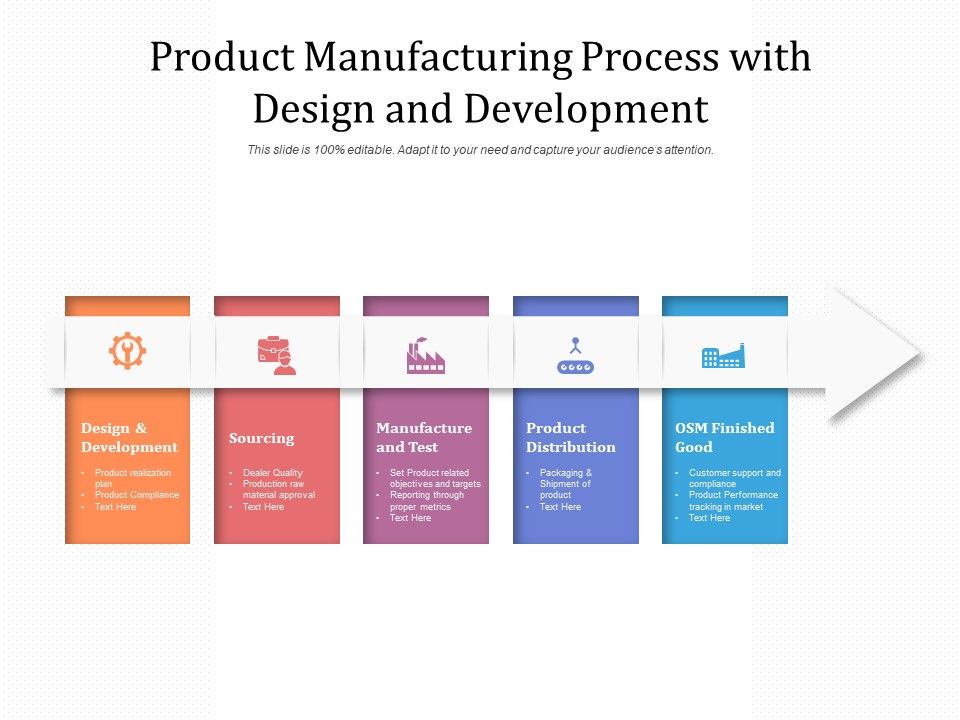
Modern manufacturing operations demand meticulous planning and foresight. Effective manufacturing production design is the blueprint for operational success, directly impacting product quality, cost-efficiency, and market responsiveness. It moves beyond simply creating a product; it involves strategically planning the entire journey from raw material to finished goods, ensuring every step is optimized for peak performance and adaptability. This integrated approach is crucial for companies aiming to maintain a competitive edge in today’s fast-paced industrial landscape.

Overview:

  • Manufacturing production design is a strategic blueprint for the entire product lifecycle, optimizing efficiency and quality.
  • Integrating Design for Manufacturability (DFM) early on reduces costs, complexity, and improves product quality.
  • Leveraging automation, robotics, AI, and IoT enhances precision, speed, and consistency in production.
  • Applying lean principles minimizes waste, improves flow, and fosters continuous improvement within operations.
  • Sustainability is a core component, focusing on eco-friendly materials, energy efficiency, and waste reduction.
  • Adaptability in design and process allows companies to respond quickly to market changes and supply chain disruptions.
  • Effective manufacturing production design is critical for cost reduction, faster time-to-market, and maintaining high product standards.

Integrating Design for Manufacturability in Manufacturing Production Design

One of the foundational elements of effective manufacturing production design is the early integration of Design for Manufacturability (DFM) and Design for Assembly (DFA) principles. This approach means that as a product is being conceptualized, its ease of manufacturing and assembly is considered from the very beginning. By collaborating closely with manufacturing engineers, product designers can proactively identify and eliminate potential production bottlenecks, simplify component geometry, and reduce the total number of parts. For instance, selecting readily available, standardized components over custom-made ones can drastically cut lead times and material costs. Similarly, designing parts that can only be assembled in one correct orientation prevents errors on the production line. This foresight not only streamlines the production process but also significantly impacts the overall cost of goods and the quality of the final product, preventing costly redesigns later in the development cycle. In a competitive market, products designed with manufacturing efficiency in mind often reach customers faster and with fewer defects, leading to higher customer satisfaction.

Leveraging Automation and Technology in Manufacturing Production Design

The digital age has brought unprecedented opportunities for optimizing manufacturing production design through automation and advanced technologies. Incorporating robotics, Artificial Intelligence (AI), and the Internet of Things (IoT) can revolutionize production lines. Robotic systems offer unparalleled precision, speed, and repeatability for tasks ranging from assembly and welding to material handling, minimizing human error and reducing labor costs. AI-driven analytics can predict equipment failures, optimize production schedules, and identify areas for efficiency gains by processing vast amounts of operational data. IoT sensors embedded in machinery and products provide real-time insights into performance, allowing for immediate adjustments and proactive maintenance. The implementation of digital twins, virtual replicas of physical systems, further assists in simulating and testing production changes without disrupting live operations. Companies in the US, for example, are increasingly investing in these smart factory technologies to boost productivity and maintain global competitiveness,

Manufacturing Localisation Indonesia Market Growth

Indonesia presents a compelling landscape for businesses looking to expand their manufacturing operations. The archipelago’s strategic location, growing domestic market, and abundant natural resources make it an attractive destination. However, succeeding in this dynamic environment requires more than just setting up shop. It demands a deep understanding of the local nuances and a commitment to Manufacturing Localisation (Indonesia). This involves integrating local resources, complying with regulations, and building strong relationships with Indonesian partners. Embracing localisation can lead to increased competitiveness, sustainable growth, and a stronger connection with the Indonesian market.

Key Takeaways:

  • Manufacturing Localisation (Indonesia) is crucial for businesses seeking long-term success in the Indonesian market.
  • Localisation involves integrating local resources, complying with regulations, and building strong relationships.
  • Successful localisation can lead to increased competitiveness and a stronger connection with the Indonesian market.
  • Understanding the challenges and opportunities in the Indonesian manufacturing sector is essential for making informed decisions.

Understanding the Importance of Manufacturing Localisation (Indonesia)

Why is Manufacturing Localisation (Indonesia) so important? The Indonesian government actively promotes it to foster domestic economic growth, create jobs, and reduce reliance on imports. Government policies, such as local content requirements (TKDN), incentivize companies to source materials and labor locally. These requirements are often tied to government projects and procurement, making localisation a necessity for companies aiming to secure these opportunities.

Beyond compliance, embracing Manufacturing Localisation (Indonesia) offers several strategic advantages. It can lower production costs by reducing transportation expenses and import duties. It also enhances supply chain resilience by shortening lead times and mitigating risks associated with global disruptions. Furthermore, using local resources and expertise can lead to more innovative products and services tailored to the specific needs of the Indonesian market. When companies invest in local communities, they create positive social impact that improves brand image and increase customer loyalty.

Benefits of Successful Manufacturing Localisation (Indonesia) for Businesses

The benefits of successful Manufacturing Localisation (Indonesia) extend far beyond simply meeting regulatory requirements. For businesses, it translates to tangible improvements in profitability, market share, and long-term sustainability. Reduced costs from sourcing materials and labor locally can significantly improve bottom lines. A more responsive and resilient supply chain allows companies to react quickly to changing market demands and minimize disruptions.

By tailoring products and services to the Indonesian market, businesses can gain a competitive edge and capture a larger share of the growing domestic consumer base. Investing in local communities and building strong relationships with Indonesian partners builds trust and fosters long-term loyalty. These are all crucial factors for succeeding in a market that values personal connections and social responsibility. Ultimately, Manufacturing Localisation (Indonesia) empowers businesses to thrive in a dynamic and competitive landscape.

Challenges and Opportunities in Manufacturing Localisation (Indonesia)

While the benefits of Manufacturing Localisation (Indonesia) are clear, it’s important to acknowledge the challenges. Finding qualified local suppliers can sometimes be difficult, requiring investment in training and development. Navigating the complex regulatory landscape and understanding local business practices requires careful planning and expertise. Cultural differences can also present communication and